
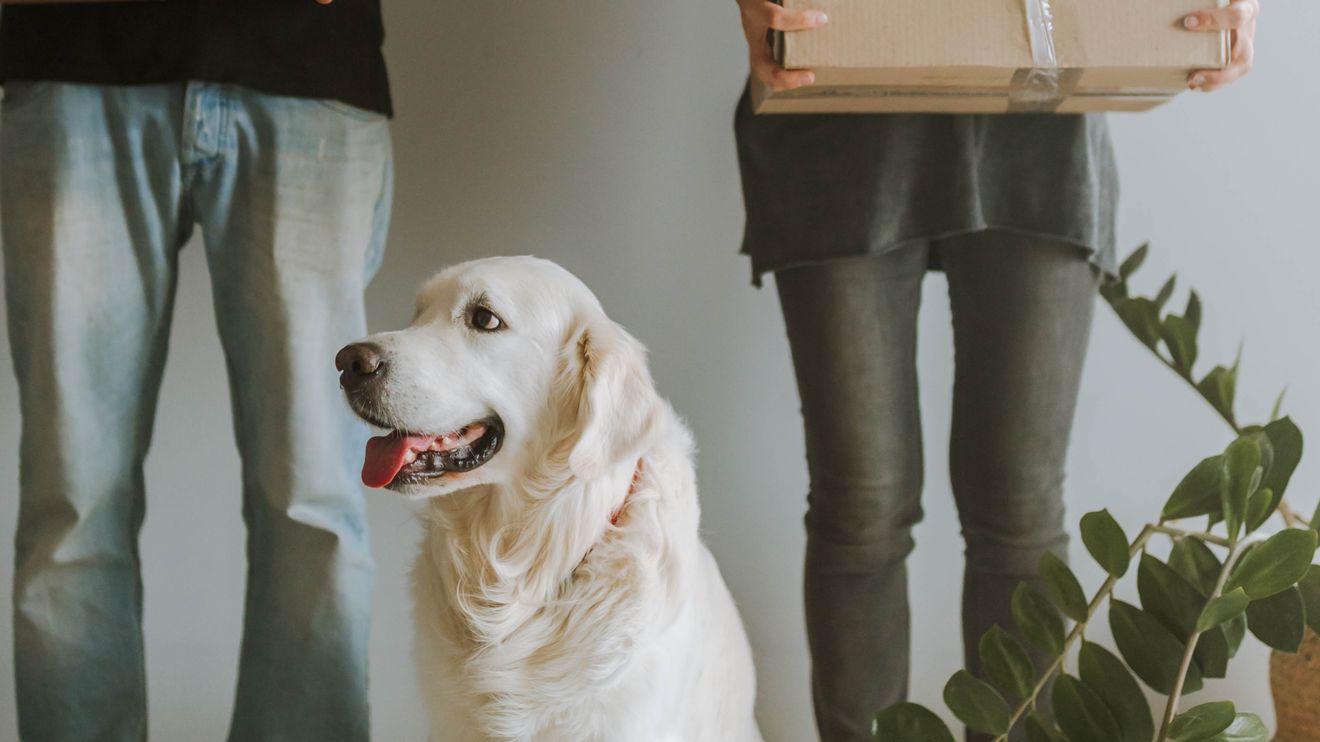
Moving changes the sights, sounds, smells, and routines that help pets feel secure. Open doors, unfamiliar people, stacked boxes, and travel can create stress even for animals that are normally calm. A little advance planning protects pets from escaping, overheating, becoming injured, or arriving at the new home without essential supplies.
This guide focuses on practical preparation for dogs, cats, and other common household pets during a Southern California move.
Update identification before moving day
Check that collars fit correctly and identification tags show a current mobile number. Update the address and phone information connected to the pet’s microchip. Keep a recent photo of each pet on your phone in case an animal becomes lost.
Place veterinary records, vaccination information, medication instructions, microchip details, and emergency contacts in a folder that travels with you.
Schedule veterinary needs early
If your pet takes medication, request enough for the moving period and the first weeks after arrival. Ask your veterinarian about motion sickness, severe anxiety, temperature sensitivity, or other travel concerns. Do not give a pet a new sedative or calming product on moving day without professional guidance.
For a longer relocation, identify a veterinary clinic near the new home before you need one.
Keep routines as normal as possible
Boxes and changing furniture arrangements can make the home feel unfamiliar. Maintain regular feeding, walking, play, and sleep schedules. Pack pet belongings late so beds, bowls, toys, scratching posts, and familiar blankets remain available.
Introduce carriers gradually. Leave a carrier open with a familiar blanket and treats rather than bringing it out only when the pet is already stressed.
Prepare a pet essentials kit
Pack a bag that stays with you and is not loaded onto the moving truck. Include:
- Food for several days
- Water and portable bowls
- Medication
- Leash, harness, and waste bags
- Carrier or crate
- Bed or familiar blanket
- Favorite toy
- Litter, litter box, and scoop for cats
- Cleaning supplies and paper towels
- Veterinary records and identification details
Southern California temperatures can become dangerous inside a parked vehicle. Keep pets with a responsible adult and never leave them unattended in a hot car.
Choose a safe moving-day location
The safest option is often to keep pets away from the active moving area. Consider a trusted friend, family member, daycare, boarding facility, or quiet closed room that will be emptied last.
If a pet remains in the home, place a clear sign on the door so no one opens it accidentally. Provide water, ventilation, bedding, and familiar sounds. Check the pet regularly, but do not allow it to wander through areas where furniture and equipment are moving.
Transport pets with you
Household pets should generally travel with their owners or through a specialized pet transportation service, not inside a moving truck. Secure cats and small animals in appropriate carriers. Use a properly fitted restraint or crate for dogs.
Plan breaks for longer drives, but open carriers only in secure spaces. A frightened animal may run even if it normally responds reliably to commands.
Prepare the new home before release
Inspect doors, screens, fences, gates, balconies, cabinets, and hiding spaces. Remove packing straps, plastic wrap, tape, sharp tools, cleaning chemicals, and small objects that may be swallowed.
Set up one quiet room with food, water, bedding, toys, and a litter box before the pet arrives. This creates a familiar base while the rest of the home is active.
Introduce the new space gradually
Cats and cautious dogs often adjust better when they begin in one room and explore slowly. Keep meals and walks on a familiar schedule. Use the same bed, bowls, and blankets when possible.
Do not force interaction. Some pets explore immediately; others hide or eat less for a short period. Contact a veterinarian if you notice persistent refusal to eat or drink, repeated vomiting, breathing problems, extreme lethargy, injury, or behavior that causes concern.
Help dogs learn the new neighborhood
Use a leash even in areas that appear secure until the dog understands the new home and routine. Walk the immediate block, identify traffic hazards, and check local rules for parks or shared spaces. Confirm that gates latch correctly and that fence gaps are not large enough for escape.
Special considerations for small pets
Birds, reptiles, fish, rabbits, and other small animals may be sensitive to temperature, vibration, and changes in environment. Research species-specific travel requirements in advance. Keep enclosures stable and properly ventilated, and avoid placing them in direct sun or near air-conditioning vents.
Fish and aquariums often require special preparation. The tank, water, filtration, and livestock may need to be handled separately. Ask an aquarium professional for guidance when the setup is large or delicate.
A calm plan protects everyone
Pets do not understand why their home is changing, but they respond to routine, familiar objects, and safe handling. Update identification, prepare transportation, keep animals away from open doors, and establish a quiet area at the new home before unpacking begins.
Tell your moving company about pets
Let CaliGo Movers know when animals will be present so the crew can coordinate entry, open doors, and moving paths with your household’s safety plan.